Each of the ten traditional African songs from Guinea in this collection pairs a rhythm with a song and belongs to a particular moment in community life: an initiation, a mask dance, the harvest, a festival. Below you’ll find the story behind each one, what the words say where a translation is available, and a link to the recording.
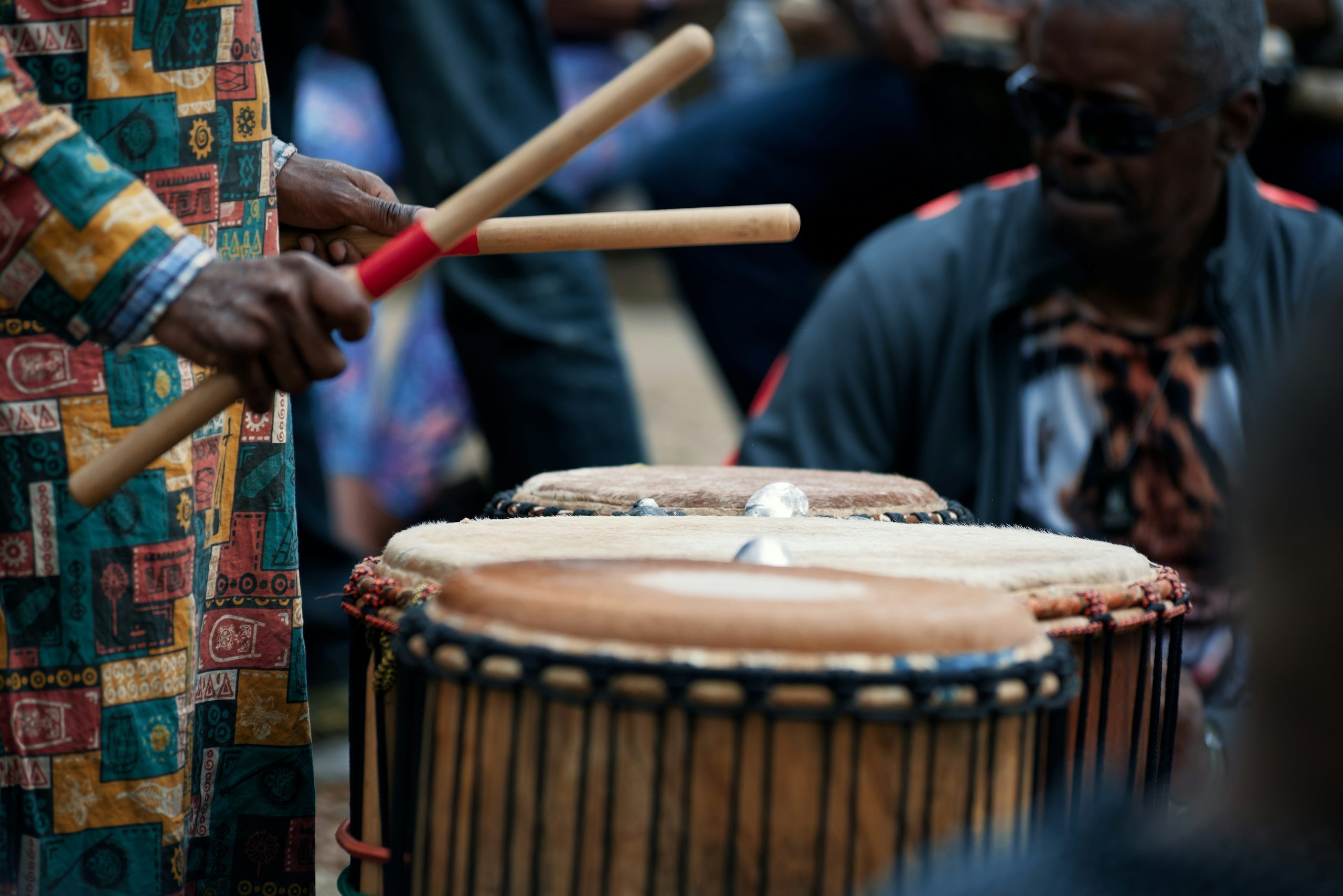
All ten recordings are by Mamady Keita (1950–2021), the Guinean djembe master who began touring internationally with the Guinean Ballet in 1965 and was highly influential in spreading the music of his culture around the world. After settling in Belgium in 1988 he founded the group Sewa Kan, whose name means “sound of joy,” and he later founded Tam Tam Mandingue which is maintained by his students today. His legacy is carried on by his former students Monette Marino and Kelvin Kew, among others worldwide. If you’d like to learn more about African drumming in this style, see my guide to djembe drumming for beginners.
Mamady Keita’s albums Wassolon, Nankama, Sila Laka, and Afö are the sources of these songs. Together they are some of the most widely performed traditional African songs from Guinea. My hope is that this sheet music can help connect classes, choirs and more people to their local Mandingue style drumming classes and create community connections. Alternatively, the apps djembeföla! and MoRhythm-Africadescribed in my djembe drumming guide can provide some accompaniment for rehearsals and for learning some of the accompanying drum parts to the songs.
Traditional African songs from Guinea at a glance: the 10 songs
| Song | Album | People and region | Occasion |
| Soli Lent | Sila Laka | Guinea | Circumcision celebrations before initiation |
| Toro | Afö | Malinke, northeast Guinea | Thanking mentors after initiation |
| Djole | Sila Laka | Mandenyi/Temine, southwest Guinea | Mask dance; weddings, harvest, and welcomes |
| Sorsonet | Nankama | Baga, Boké region, northwest Guinea | Protective mask dance; now festivities |
| Soboninkun | Sila Laka | Malinke, Wassolon region, northeast Guinea | Mask dance with a small animal mask |
| Djagbe | Wassolon | Malinke | Festivals, full moon, end of Ramadan |
| Sunu (Dansa) | Nankama | Guinea | Festivities and dance competitions |
| Kuku | Sila Laka | Manian, southern forest region | Women returning from fishing; now any celebration |
| Denadon | Nankama | Malinke, northeast Guinea | Welcoming the Mendiani dancers |
| Kassa | Sila Laka | Northeast Guinea | Encouraging people working in the fields |

Traditional African songs for life’s milestones: initiation and coming of age
Soli Lent: Aïti Iwuliba
Album: Sila Laka (Mamady Keita) | Listen on YouTube
Soli and its song are played for the circumcision celebrations that take place before boys are taken to camp for their initiation. Soli Lent is the slow version of the rhythm, which allows the elders to dance. Once the boys leave for camp, Soli is no longer played until the next group of boys is old enough for initiation.
The words call on the mothers of the children to get up, because it is time for Soli.
Toro
Album: Afö (Mamady Keita) | Listen on YouTube
Toro marks a rite of passage. This rhythm was played while Malinke boys from northeast Guinea were healing from their initiation rites and learning the essentials of manhood. The music was originally a way of giving thanks to their mentors during this time.
Traditional African songs for mask dances: Djole, Sorsonet, and Soboninkun
Djole: Lailaiko Korobe
Album: Sila Laka (Mamady Keita) | Listen on YouTube
Djole comes from southwest Guinea, from the Mandenyi/Temine people, and it is a mask dance. The mask is made in the image of a woman but worn by a man who dances in a skirt. The rhythm was originally played on siko drums, which are square frame drums, but it is now played on djembes and dununs. Today it is a popular rhythm for celebrations such as weddings, baptisms, the harvest, the end of Ramadan, and welcoming ceremonies.
Sorsonet
Album: Nankama (Mamady Keita) | Listen on YouTube
Sorsonet comes from the Baga people of the Boké region of northwest Guinea. It was originally a mask dance: the sorsonet mask served as a protector from evil, a source of good luck, and part of rituals to cure severe problems in a village. Now it has become a popular rhythm played at many festivities, one that anyone can dance to.
Soboninkun: Mory Le
Album: Sila Laka (Mamady Keita) | Listen on YouTube
The rhythm of this song belongs to a mask dance featuring a small animal mask. It comes from the Wassolon region of northeast Guinea and the Malinke people. In the song, the singer says they are leaving with Mori, the one who wears the Soboninkun mask.
Traditional African songs for festivals and celebrations
Djagbe: Alunakande
Album: Wassolon (Mamady Keita) | Listen on YouTube
Djagbe is a popular rhythm played at most festivals, such as celebrations of the full moon or the end of Ramadan, the holiest month of the year for Muslims worldwide. A special dance step goes with it, danced by everyone in a large circle. It comes from the Malinke people and is called Madan in Mali.
The song celebrates the arrival of the drummers: the sound of their arrival, the beat of the drums, is what gives the city life.
Sunu (Dansa)
Album: Nankama (Mamady Keita) | Listen on YouTube
Sunun and Dansa are popular rhythms played at all kinds of festivities. Sometimes both men and women compete to see who is the best dancer. The song praises a girl named Meyaee, saying the Sunu dance suits her well, and asks her to say hello to friends in Conakry. (On YouTube this track is titled “Sunu – Diansa.”)
Kuku: We Ni Karo Bora
Album: Sila Laka (Mamady Keita) | Listen on YouTube
The rhythm for this song comes from the Manian people of the southern Guinea forest region. It was originally played when women came back to the village after fishing. Today it is popular all over Guinea and in parts of Ivory Coast, and it is played for any celebration.
Denadon (Kanin)
Album: Nankama (Mamady Keita) | Listen on YouTube
Denadon is played to introduce the Mendiani dancers of the Malinke in northeast Guinea. The Mendiani dancers are young girls aged 5 to 13. During the Mendiani festivity, the dancers, wearing traditional costumes, are carried on the shoulders of young men into the festival location, and they are not allowed to touch the ground until they arrive to dance. Denadon is played as they arrive, then switches to Mendiani as they are lowered to the ground and begin to dance.
The words announce the djembe players and the Mandinka, telling everyone to make way because they are not joking around.
Traditional African songs for the fields and the harvest
Kassa: Kondon Tilu Barana
Album: Sila Laka (Mamady Keita) | Listen on YouTube
This rhythm was played to accompany people working in the fields and to encourage them. Kassa means silo or granary, and the rhythm comes from northeast Guinea. The words call the growers to get up, because the meal has arrived.
Get the free scores to these traditional African songs from Guinea
If you’d like to sing and play these ten traditional African songs, you can download all of the scores for free. Each is a full score transcribed from the recording, with the lyrics under the notes, so you can learn the songs the way they sound on the albums.
New to West African drumming? Start with my guide to djembe drumming for beginners, and see my post on drum circles and social emotional learning for more on the West African roots of community drumming.
Sources
The cultural notes above draw on the references cited in the scores:
- Mande Bala: Sorsorne
- Mande Bala: Soboninkun
- Mande Bala: Soli
- Mande Bala: Kassa
- Denadon (PDF)
- Kuku (PDF, Leicestershire Music Hub)
- Siko (PDF, Leicestershire Music Hub)
- African Rhythms (PDF, Djembefoley)
- Sunu notation (Bob Miller)
- Mamady Keita profile (World Music Central)
- djembeföla! app
- MoRhythm-Africa app
- Mamady Keita, Wassolon, CD liner notes
- Mamady Keita, Nankama, CD liner notes
- Mamady Keita, Sila Laka, CD liner notes
- Mamady Keita, Afö, CD liner notes