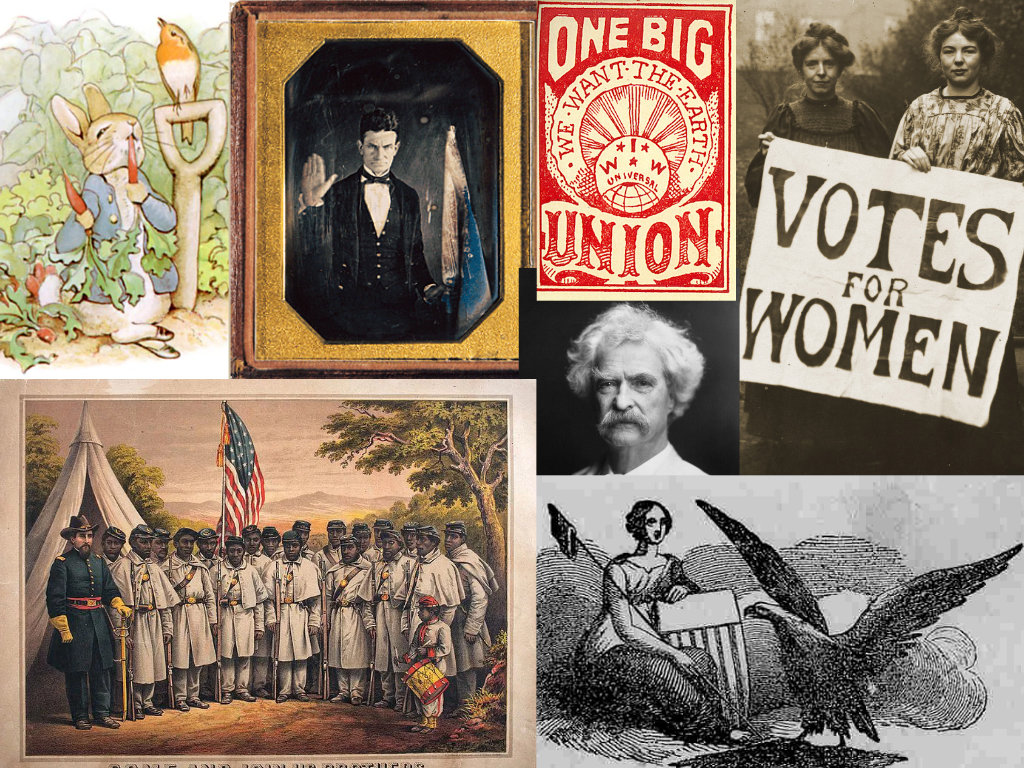
How a single melody carried America’s abolitionists, soldiers, suffragists, laborers, civil rights marchers — and a little rabbit — across two centuries
I first knew this melody as being about a small rabbit with a fly upon his nose. I learned it as a child in Australia, where the British version — “Little Peter Rabbit” — was apparently the way the tune arrived in the Southern Hemisphere. My American students know it as “John Brown’s Baby.” Few of us had any idea we were singing one of the most politically charged melodies in the English-speaking world.
For detailed lesson plans for teaching either “Little Peter Rabbit” or “John Brown’s Baby,” visit this page.
That’s what makes this tune such a remarkable teaching tool. It has been sung by enslaved people marching toward freedom, by union workers on strike, by suffragists demanding the vote, and by children in every corner of the globe — all to the same melody.
THE CHRONOLOGICAL JOURNEY
c. 1700-1800 — “Say, Brothers, Will You Meet Us?”
American Camp-Meeting Hymn — origin unknown
“Say, brothers, will you meet us on Canaan’s happy shore?”
— from one of the published hymn texts
This is where everything begins. A simple, repetitive call-and-response hymn born out of religious camp meetings across America’s frontier. These gatherings were held in places without access to a church, where people would come together to hear a traveling preacher. It is possible that the song grew from the tradition of participants taking lines from the preacher’s sermon and setting them to pre-existing melodies when moved to do so. The origin of the melody itself is unknown; some have speculated that it came from sources as diverse as an African American wedding song or ring shout, a British sea shanty, or a Swedish drinking song. Because the song belonged to an oral tradition many versions of the lyrics circulated simultaneously. The “Glory, Glory, Hallelujah” chorus was eventually taken up by Union soldiers stationed at Fort Warren in Boston, who turned it into something else entirely.
Lyrics: https://hymnary.org/text/say_brothers_will_you_meet_us
Recording: https://youtu.be/8N8dBex8lY8
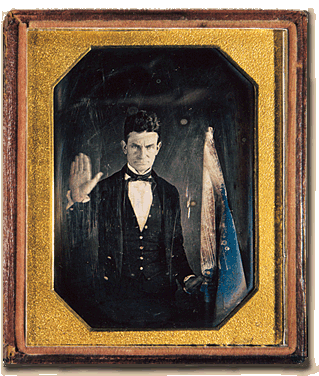
1861 — “John Brown’s Body”
Union Army Marching Song — collective composition, 2nd Battalion, Massachusetts Infantry
“John Brown’s body lies a-mouldering in the grave, but his soul goes marching on.”
— traditional verse
The song began as a joke at the expense of Sergeant John Brown — a Scottish soldier whose name happened to match that of the famous abolitionist who had led a militia to free enslaved people in Virginia in the 1850s. Soldiers repurposed the camp-meeting tune to tease their fellow soldier: “John Brown is dead!” The humor spread rapidly; the song accumulated verse after verse, and suddenly an entire army was singing it.
But something remarkable happened along the way: the joke became a tribute. The historical John Brown — the radical abolitionist — began to inhabit the song. New verses celebrated his bravery as the Civil War was fought to end slavery. This is the folk process at its most powerful: a communal, oral act of meaning-making.
Brown’s friend and admirer Frederick Douglass wrote in an 1874 newspaper piece: “He [John Brown] was with the troops during that war, he was seen in every campfire, and our boys pressed onward to victory and freedom, timing their feet to the stately stepping of Old John Brown as his soul went marching on.”
Lyrics & History: https://en.wikipedia.org/wiki/John_Brown%27s_Body
Recording: https://youtu.be/4VsE9T4Sr30
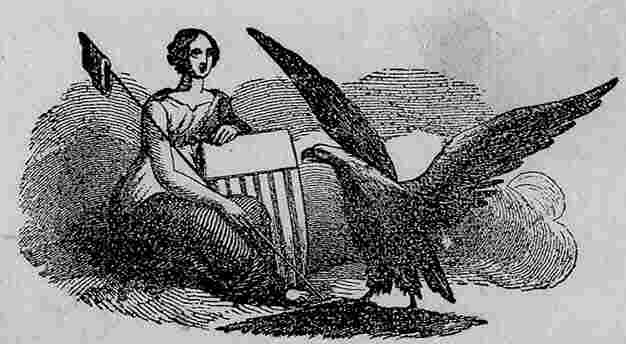
1862 — published February — “The Battle Hymn of the Republic”
Julia Ward Howe — published in The Atlantic Monthly
“He hath loosed the fateful lightning of His terrible swift sword; His truth is marching on.”
— Julia Ward Howe, verse 1
Julia Ward Howe — poet, abolitionist, and later suffragist — wrote new words for the tune after hearing soldiers sing “John Brown’s Body” near Washington. Her companion, the Reverend James Freeman Clarke, had urged her to write something more “fitting” for the melody. What she produced was an anti-parody: she took the soldiers’ irreverent song and transformed it into sacred poetry.
Howe received $5 from The Atlantic Monthly for what became one of the most recognized songs in American history. The soldiers, it is said, were reluctant to abandon their version. In the end, they kept both.
Lyrics: https://www.battlefields.org/learn/primary-sources/civil-war-music-battle-hymn-republic
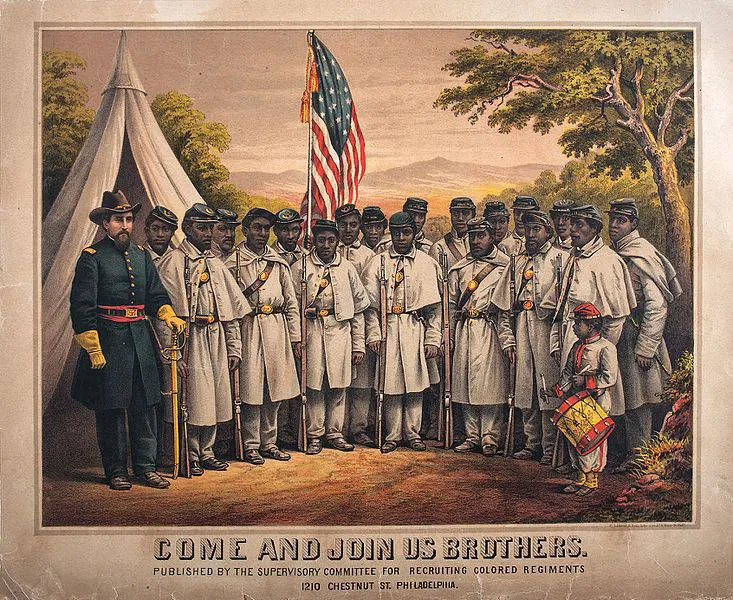
1863 — “Marching Song of the First Arkansas”
Also known as “The Valiant Soldiers” — attributed to Sojourner Truth and Capt. Lindley Miller
“We are going out of slavery; we are bound for freedom’s light.”
— verse 2
The tune’s power as a vehicle for the voiceless becomes undeniable here. The First Arkansas Colored Regiment — men who had been enslaved — took the same melody and wrote their own truth into it. The song has been described as one of the most powerful early statements of Black pride and militancy in American music, anticipating the spirit of the civil rights movement by nearly a century.
An almost identical version is attributed to Sojourner Truth, who sang it as a marching song for colored regiments. Sweet Honey in the Rock recorded it in 1993 as “Sojourner’s Battle Hymn” — a stirring recording well worth sharing with older students.
Lyrics & History: https://en.wikipedia.org/wiki/Marching_Song_of_the_First_Arkansas
Recording: https://youtu.be/DwSZgLLqPy8?si=LtziKAgFlm4Raf3p
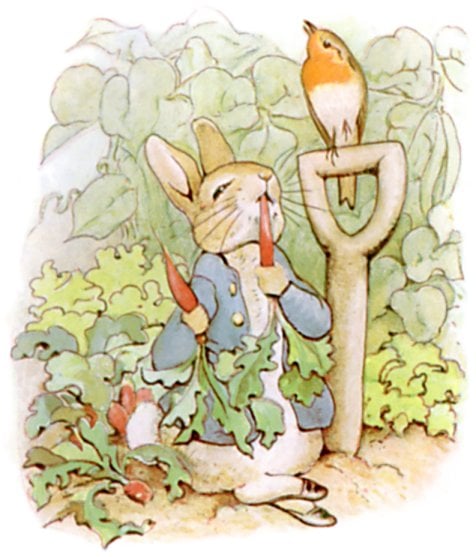
Late 1800s — “Little Peter Rabbit” and “John Brown’s Baby”
Children’s Action Songs — British colonies and North America
“So he flipped it and he flopped it and it flew away!”
— Little Peter Rabbit, chorus action
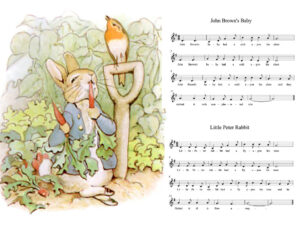
Here is where my own story intersects with this melody’s journey. I grew up in Australia singing “Little Peter Rabbit had a fly upon his nose” — and it appears the British colonial version of the song traveled with the tune to Australia, New Zealand, and beyond. American children know the same action-song tradition through “John Brown’s Baby had a cold upon his chest,” with its delightful mime of rubbing in camphorated oil.
The character of Peter Rabbit was first created by Beatrix Potter in 1893, giving us a rough date for this version’s emergence. That I learned this tune as a child in Australia through a song shaped by the British colonial tradition is a small reminder of how music travels — often carrying its social history invisibly, tucked inside something as simple as a rabbit with a fly on his nose.
See the lesson plan here for lyrics and melody
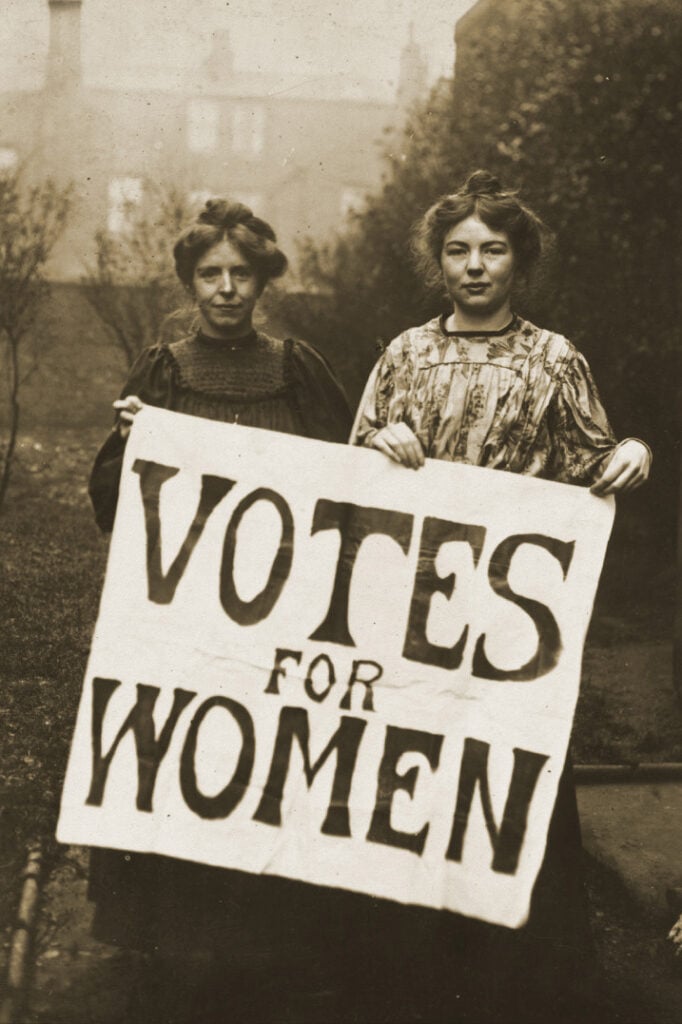
1890s–1915 — “The Hallelujah Song” and many others
Various authors — Women’s Suffrage Movement, USA and UK
We’re here to swell the anthem that is heard across the sea,
That equal rights in law and love is meant for you and me,
Where every law was founded on the plane of liberty
While Truth came marching on.
— attr. L. May Wheeler
It is no coincidence that Julia Ward Howe — who wrote “The Battle Hymn of the Republic” — spent her later years as a passionate suffragist. The melody she had helped make famous was ready to be repurposed once more. Suffragist songsters — printed booklets of new lyrics set to well-known tunes — circulated widely at marches and rallies because they required no musical training: the tune was already in everyone’s body.
Multiple sets of suffragist lyrics were written to this melody between the 1890s and the 1910s. The use of a familiar tune lowered the barrier to participation and aided in the memorization of new words — a lesson that applies directly to ELL classrooms today.
Lyrics: https://folkways-media.si.edu/docs/folkways/artwork/FW05281.pdf
Recording: https://youtu.be/4Wq8-wvzbSI
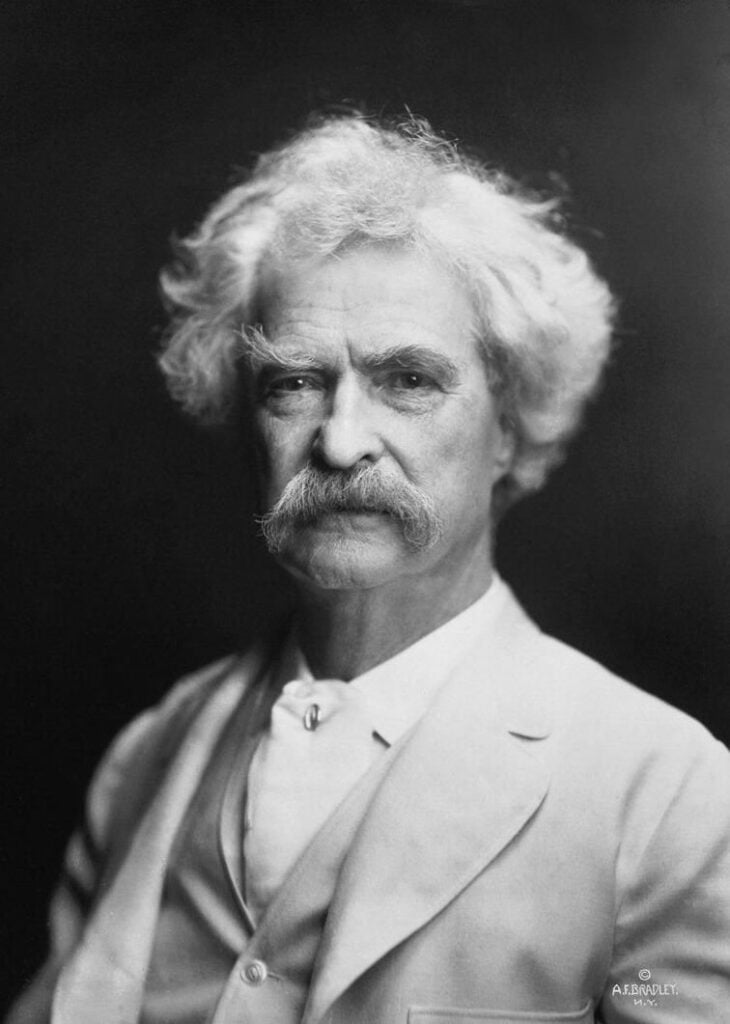
1900 — “The Battle Hymn of the Republic, Updated”
Mark Twain — anti-imperialist parody; unpublished until 1958
Mine eyes have seen the orgy of the launching of the Sword;
He is searching out the hoardings where the stranger’s wealth is stored;
He hath loosed his fateful lightnings, and with woe and death has scored;
His lust is marching on.
— Mark Twain, verse 1
Mark Twain wrote this savage parody in response to the Philippine-American War, in which the United States seized control of the Philippines following the Spanish-American War. He was furious. Rather than write an essay, he did what had always worked: he took the tune and rewrote the words, swapping Howe’s divine righteousness for biting irony. The song was considered too incendiary to publish and sat in his papers until 1958.
For language arts classrooms, comparing Twain’s version side by side with Howe’s original is a powerful exercise in rhetorical intent and word choice. The shift in sentiment between the two versions also illuminates a significant change in American public opinion: the nation that had proudly thrown off its British colonial rulers was now, in the eyes of many, becoming a colonial power itself.
Lyrics & History: https://en.wikipedia.org/wiki/The_Battle_Hymn_of_the_Republic,_Updated
Recording: https://youtu.be/U9C6fw9q1fo
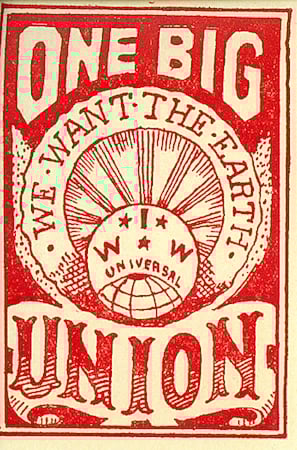
1915 — January 15 — “Solidarity Forever”
Ralph Chaplin — Industrial Workers of the World (IWW)
“When the union’s inspiration through the workers’ blood shall run — the union makes us strong.”
— Ralph Chaplin, chorus
Ralph Chaplin completed this song on January 15, 1915, in Chicago, during a hunger demonstration, inspired by the resolve of striking miners in West Virginia. The melody he chose was, of course, the same one soldiers, abolitionists, and suffragists had already claimed. The labor movement was simply taking its turn.
“Solidarity Forever” spread far beyond the IWW to become the most widely recognized labor anthem in the United States, Canada, Australia, and New Zealand. Pete Seeger, Utah Phillips, and John Darnielle are among its many recorded performers.
Lyrics: https://www.zinnedproject.org/materials/solidarity-forever/
Recording (Pete Seeger): https://youtu.be/R8eK9ZXf-Ow
1960s — Civil Rights — “Move On Over”
Len Chandler — performed with Pete Seeger on Rainbow Quest
“Move on over or we’ll move on over you — freedom’s marching on.”
— Len Chandler, chorus
Folk singer and civil rights activist Len Chandler wrote this anthem during the civil rights movement and performed it with Pete Seeger on Seeger’s television program Rainbow Quest. The phrase “move on over or we’ll move on over you” carries the nonviolent movement’s moral authority without sacrificing urgency.
This phrase would travel directly into the next entry on our list, where it became the chorus of the women’s liberation movement. One song literally feeds the next across movements and decades.
Lyrics: https://www.antiwarsongs.org/canzone.php?id=63571&lang=en
Recording (with Pete Seeger): https://youtu.be/5nCuz4qjTro
1971 — “Battle Hymn of Women”
Women’s Liberation Movement — lyrics published in Sing Out! magazine, 1971
“Move on over or we’ll move on over you — women are marching on.”
— chorus, borrowed directly from Len Chandler
The women’s liberation movement did exactly what generations of activists before them had done: they took the tune and made it their own. The chorus was borrowed directly and deliberately from Len Chandler’s civil rights anthem, drawing an explicit connection between the two movements’ struggles. Gloria Steinem sang a version at the 1972 Democratic National Convention.
This is a meaningful moment to share with students: these movements were in conversation with each other through song. The borrowed lyrics function as a form of citation — a way of saying, “we stand on the same ground.”
Recording: https://youtu.be/oLrfaEwMWJ0
BRINGING THIS INTO THE CLASSROOM
History, Language Arts, and Music Together
The Melody as a Living Primary Source
Most primary sources are texts that students read. This melody is a primary source they can sing. Each version is a document of its moment: the mood of a regiment or the urgency of a movement. When students sing “We are going out of slavery; we are bound for freedom’s light,” they are not reading about history — they are voicing it.
Lyrical Transformation as a Language Arts Skill
Every version on this list is an act of writing: someone took a known melody and asked, “What do we need to say?” That is songwriting, yes — but it is also persuasive writing, narrative writing, and poetry, all at once. Comparing Howe’s “His truth is marching on” with Twain’s “His lust is marching on” — a single changed word — teaches more about diction and tone than many a conventional exercise can.
Entry Points for Every Age
The progressive action songs — “Little Peter Rabbit” and “John Brown’s Baby” — are among the best entry points in the repertoire for early childhood and ELL classrooms. The repetitive structure, predictable substitution pattern, and physical engagement make them accessible to singers at any language level. From that shared musical experience, older learners can move outward into the full historical arc. The children’s songs are not separate from the political ones: they share the same melody, and knowing that is itself a lesson.
Call and Response as a Cultural Throughline
The call-and-response structure that made “Say, Brothers” irresistible in a frontier camp meeting is the same structure that makes “Little Peter Rabbit” work with kindergarteners, and the same structure that made labor and civil rights anthems so effective at rallies. Discussing with students why this structure is so powerful — why singing together creates solidarity — bridges music education directly to social studies and to students’ own cultural musical traditions.
For ELL Students in Particular
This melody offers ELL learners a rare gift: a single musical structure that can be entered at any point on the continuum from “Little Peter Rabbit” to “The Battle Hymn of the Republic.” The repetition reduces cognitive load, the physical action songs make meaning concrete, and the historical versions offer authentic, high-interest reading texts. Studying how activists deliberately chose familiar tunes to lower participation barriers for diverse, multilingual audiences makes the connection to ELL pedagogy both explicit and powerful.
REFERENCES
American Battlefield Trust. “Civil War Music: The Battle Hymn of the Republic.” https://www.battlefields.org/learn/primary-sources/civil-war-music-battle-hymn-republic
Beall, Pamela Conn, and Susan Hagen Nipp. Wee Sing Children’s Songs and Fingerplays. Price Stern Sloan, 1979.
Beall, Pamela Conn, and Susan Hagen Nipp. Wee Sing Silly Songs. Price Stern Sloan, 1982.
Beth’s Notes. “John Brown’s Baby.” https://www.bethsnotesplus.com/2015/03/john-browns-baby.html
Beth’s Notes. “Little Peter Rabbit.” https://www.bethsnotesplus.com/2016/03/little-peter-rabbit.html
Folk Infusion. “John Brown’s Body, Battle Hymn of the Republic, and Solidarity Forever.” http://folkinfusion.blogspot.com/2013/10/john-browns-body-battle-hymn-of.html
Hugh, Brent. “Battle Hymn of the Republic — John Brown’s Body, and other texts sung to that famous tune.” https://brenthugh.com/piano/john-brown.html
HuffPost. “The ‘Battle Hymn of the Republic’ as Feminist Anthem.” https://www.huffpost.com/entry/the-battle-hymn-of-the-republic-as-feminist-anthem_n_55b918e7e4b0074ba5a7318a
Hymnary.org. “Say, Brothers, Will You Meet Us?” https://hymnary.org/text/say_brothers_will_you_meet_us
Jopiepopie [music history blog]. “Glory, Glory Hallelujah / Say Brothers Will You Meet Us / John Brown’s Body / Battle Hymn of the Republic / Solidarity Forever / Little Peter Rabbit.” https://jopiepopie.blogspot.com/2020/08/say-brothers-will-you-meet-us-battle.html
Nursery Rhyme Central. “Little Peter Rabbit Nursery Rhyme — Lyrics, History, Video, Lesson Plans & More.” https://nurseryrhymecentral.com/little-peter-rabbit-nursery-rhyme-lyrics-history-video-lesson-plans-more/
Smithsonian Folkways. “Songs of the Women’s Suffrage Movement” (liner notes, FW05281). https://folkways-media.si.edu/docs/folkways/artwork/FW05281.pdf
The Suffragettes. “Anthems.” https://www.thesuffragettes.org/resources/anthems/
Wikipedia contributors. “Battle Hymn of the Republic.” Wikipedia, The Free Encyclopedia. https://en.wikipedia.org/wiki/Battle_Hymn_of_the_Republic
Wikipedia contributors. “Blood on the Risers.” Wikipedia, The Free Encyclopedia. https://en.wikipedia.org/wiki/Blood_on_the_Risers
Wikipedia contributors. “John Brown’s Body.” Wikipedia, The Free Encyclopedia. https://en.wikipedia.org/wiki/John_Brown%27s_Body
Wikipedia contributors. “Marching Song of the First Arkansas.” Wikipedia, The Free Encyclopedia. https://en.wikipedia.org/wiki/Marching_Song_of_the_First_Arkansas
Wikipedia contributors. “Music and Women’s Suffrage in the United States.” Wikipedia, The Free Encyclopedia. https://en.wikipedia.org/wiki/Music_and_women%27s_suffrage_in_the_United_States
Wikipedia contributors. “Solidarity Forever.” Wikipedia, The Free Encyclopedia. https://en.wikipedia.org/wiki/Solidarity_Forever
Wikipedia contributors. “The Battle Hymn of the Republic, Updated.” Wikipedia, The Free Encyclopedia. https://en.wikipedia.org/wiki/The_Battle_Hymn_of_the_Republic,_Updated